This foundry dates from 1978. The family behind it was working metal in Mannar more than a century before that — and the man who built it is still running it.
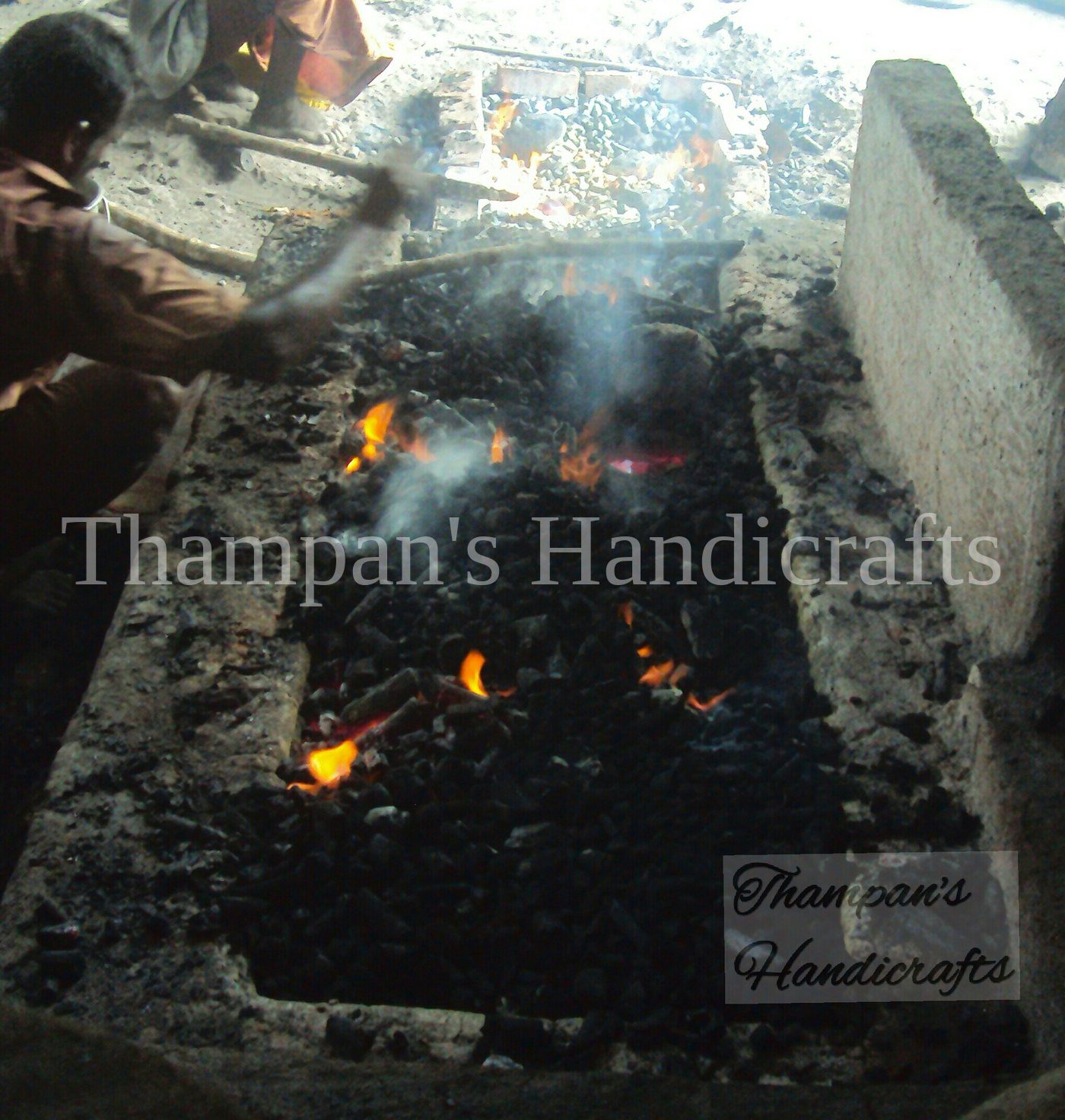
മാന്നാർ വെങ്കലഗ്രാമം എന്നാണ് അറിയപ്പെടുന്നത്. ഈ ഗ്രാമത്തിൽ സ്വന്തം വീട്ടിൽത്തന്നെ ഒരു ആല നടത്തിയിരുന്ന വർക്കി മാത്തനിൽ നിന്നാണ് ഞങ്ങളുടെ യാത്ര തുടങ്ങുന്നത്; നാട്ടുകാർ അദ്ദേഹത്തെ ഉണ്ണി മാപ്പിള എന്നാണ് വിളിച്ചിരുന്നത്. ഗ്രാമത്തിലെ കരകൗശല വിദഗ്ധരെ ഒരുമിച്ചു കൊണ്ടുവന്നത് അദ്ദേഹമാണ്. 2013-ൽ, 104-ാം വയസ്സിൽ അദ്ദേഹം മരിച്ചു. 1978-ൽ മാന്നാറിൽ മിനി ഇൻഡസ്ട്രിയൽ എസ്റ്റേറ്റ് വന്നപ്പോൾ അദ്ദേഹത്തിന്റെ മകൻ തമ്പാൻ അവിടെ ഫൗണ്ടറി ആരംഭിച്ചു — ഇന്നും അദ്ദേഹംതന്നെയാണ് അത് നടത്തുന്നത്.
Mannar has cast bronze for generations. Kerala Tourism still lists it as a bell metal town, and for most of the last century that was not a description of the past but of what the village did for a living.
The Ponnampallil family has been part of that for as long as anyone can account for — working in small-scale brass long before the foundry that exists today.
Varkey Mathan, widely known as Unni Mappila, ran a home foundry in the village and organised the local artisans around it. He died in 2013, aged 104.
In his time there was no shop and no showroom. Vendors came to the house from across Kerala, bought bronze, brass and copper directly from the foundry, and carried it out to the villages — selling at temple festivals (ഉത്സവം, Utsavam) and church festivals (പെരുന്നാൾ, Perunnal). The festival calendar was the distribution network.
His family had been working small-scale brass before him. That is where the 1860s comes from: not a document, but an unbroken working memory in one family in one village.
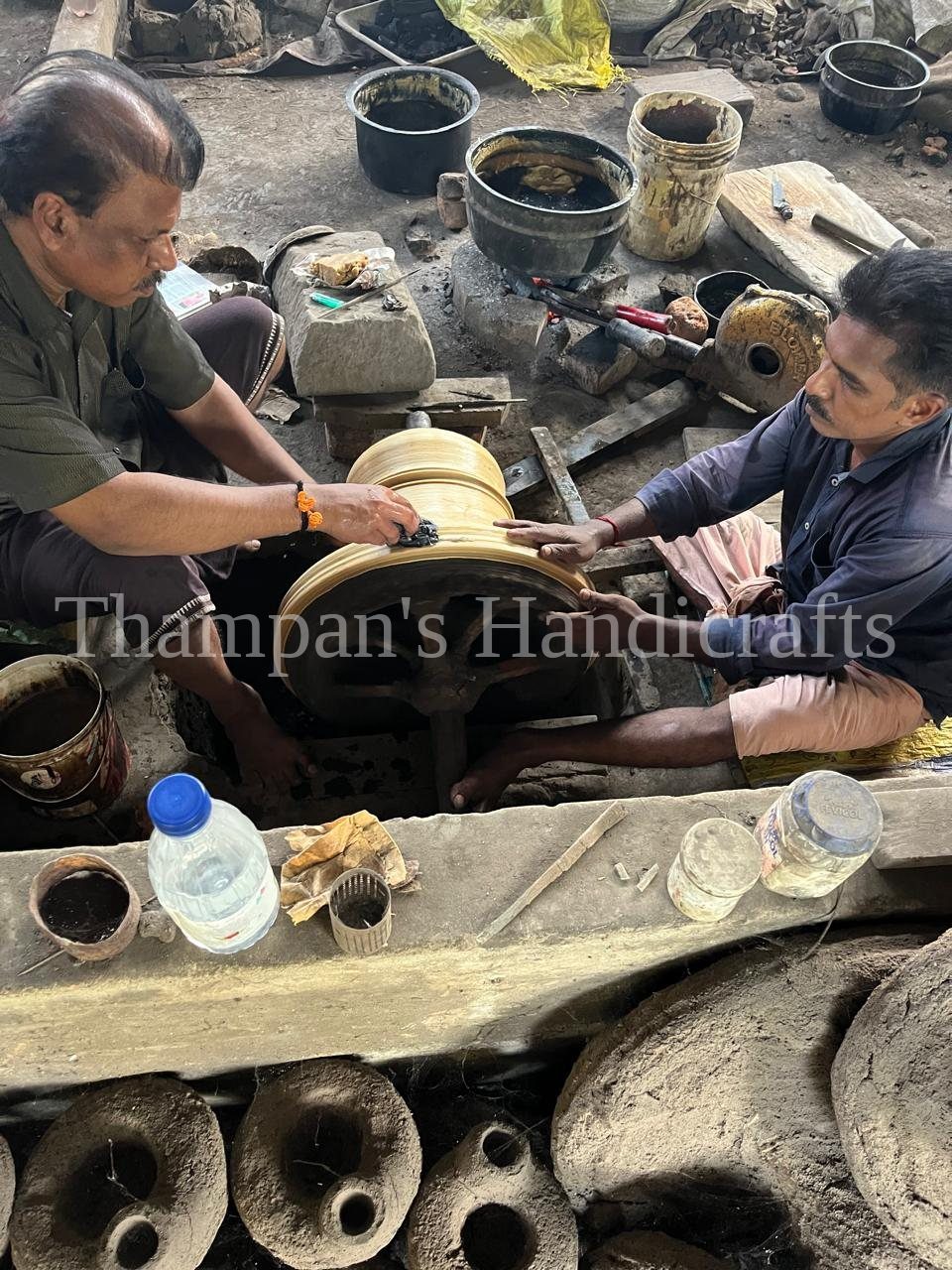
In 1978 Kerala's Industries Department set up a Mini Industrial Estate in Mannar. Varkey Mathan's son, Thampan, built the foundry there and scaled up production.
For a time both ran together — the home foundry and the new unit. Today the Mini Industrial Estate foundry is the business, and Thampan is still running it.
Mannar had around 34 bell-metal enterprises and something over 300 workers. Today there are roughly 6 enterprises and about 20 workers.
The craft's artisans come traditionally from the Vishwakarma community, and what changed was not demand — it was that fewer people entered the trade. Better education opened other work, and the next generation took it. Finding skilled hands became the hardest part of the business, and we felt it too.
Two things carried us through. We had built a supply network across Kerala rather than depending on one market. And our castings were better than what the Mannar wholesale markets were selling locally — which is why the vendors kept coming back.
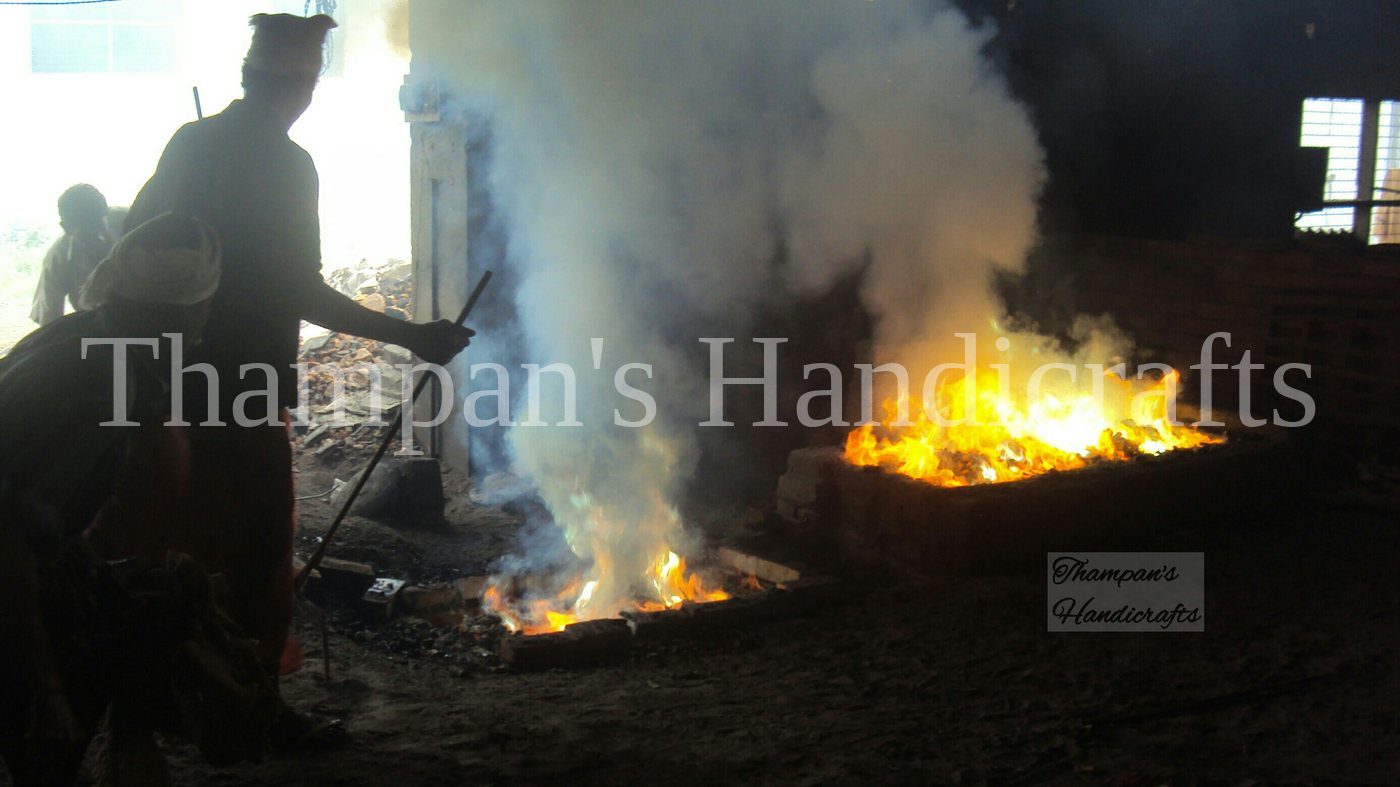
Everything here is cast by lost-wax — the same method, essentially unchanged, that the village has used for generations. It is slow, and it is why no two pieces are quite identical.
Most of it is recycled — old vessels, bells and lamps rather than raw ore. Copper and tin are melted together to make the working alloy (വെങ്കലം, vengalam).
Nothing is carved from a block. A hollow clay core is built by hand first, shaped to the inside of the finished piece — the inner curve of a bell, the inner bowl of an uruli. Specially prepared molten wax is then applied over that core batch by batch, from a large loaf, until the piece has its full form.
There is no template and no machine profile. The final precision is the artisan's eye and hand. On a mid-sized church bell this stage alone is two to three days of intense work, and lettering — a parish name, a date — is hand-cut from the same wax and laid on at the end.
Clay is built up around the wax in layers — coarse first, finer nearer the surface where the detail lives. Fine clay from the banks of the Pampa was always the prized material for this.
A temporary dome kiln is built around the inverted mould and the wax is melted out — roughly two hours. This is the step the process is named for: the wax was originally discarded, or "lost". Artisans later worked out it could be collected and used again.
The hollow mould is fired to harden it against the heat to come, and it must be thoroughly dry before any metal is poured. Drying takes sun. In the monsoon, everything takes longer.
Metal is melted in mud crucibles holding up to about 20 kg each, in the ola pit kiln, and poured into the buried mould. The casting cools inside the mould overnight.
The clay shell is chiselled away, and the rough casting is chiselled, ground, sanded and buffed to its finished surface. The mould is destroyed to release the piece — every mould is used once.
The foundry is in the Mini Industrial Estate at Kuttemperoor, Mannar. If you are in Kerala and want to watch a pour, call ahead and we will tell you when the next one is.
+91 94965 99206 Church bells